Walk any neighborhood in Thurston County and look at the fences that are leaning. Almost none of them failed in the middle of a board. They failed at the ground line, where a wood post meets wet soil. If you are pricing a new wood fence, the posts are the part of the quote worth the most attention, even though they are the part you will look at the least.
This article explains why we build wood fences on steel posts, what a wood fence with metal posts actually looks like, and how to compare quotes that use different post types.
Why posts decide how long a fence stands
Every part of a wood fence hangs from its posts. The boards you picked, the gate you use every day, and the straight line you paid for all depend on that one component staying put. When a post moves, the rails attached to it move, the boards follow, and the gate stops latching.
In our climate, the place a wood post is most likely to give out is not the top, where rain hits it, but the few inches at and just below the soil line. That is where air, water, and wood meet for months at a time. Our soil can stay saturated through the winter, and that is also when windstorms put the most load on a fence.
When we look at failed fences, the order is usually the same:
- The wood post at the soil line. It softens where it is wet the longest.
- The gate. A wood-framed gate racks out of square and sags.
- The rails. They shift once the post they are attached to has moved.
- The boards. Last, and often they were still fine.
That is the whole case for steel posts in one list. If the first failure point is a wood post in wet ground, the most effective fix is to stop putting wood posts in wet ground.
Wood posts vs. steel posts, side by side
| Feature | Wood posts | Steel posts |
|---|---|---|
| Where the weak point is | At the soil line, where the wood stays wet | No wood in the ground; the cedar is mounted above the soil |
| Concrete | Helps, but the wood is still exposed to the conditions that wear it down | Set in concrete, sized to the fence height and the soil on your lot |
| Upfront quote | Often lower | Standard on our wood fences, not an add-on |
| What usually fails first | The post, then the gate | The issue moves to ordinary upkeep of the boards and finish |
A wood post set in concrete does last longer than one set in dirt. It is still wood, though, and it is still sitting in the conditions that break wood down.
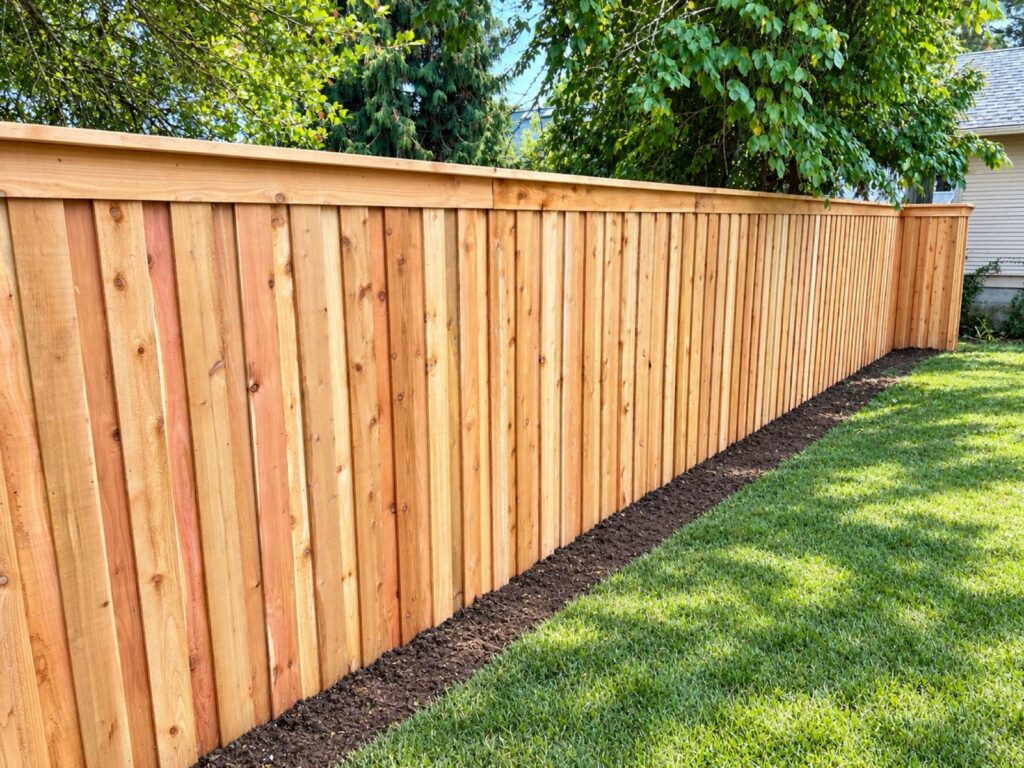
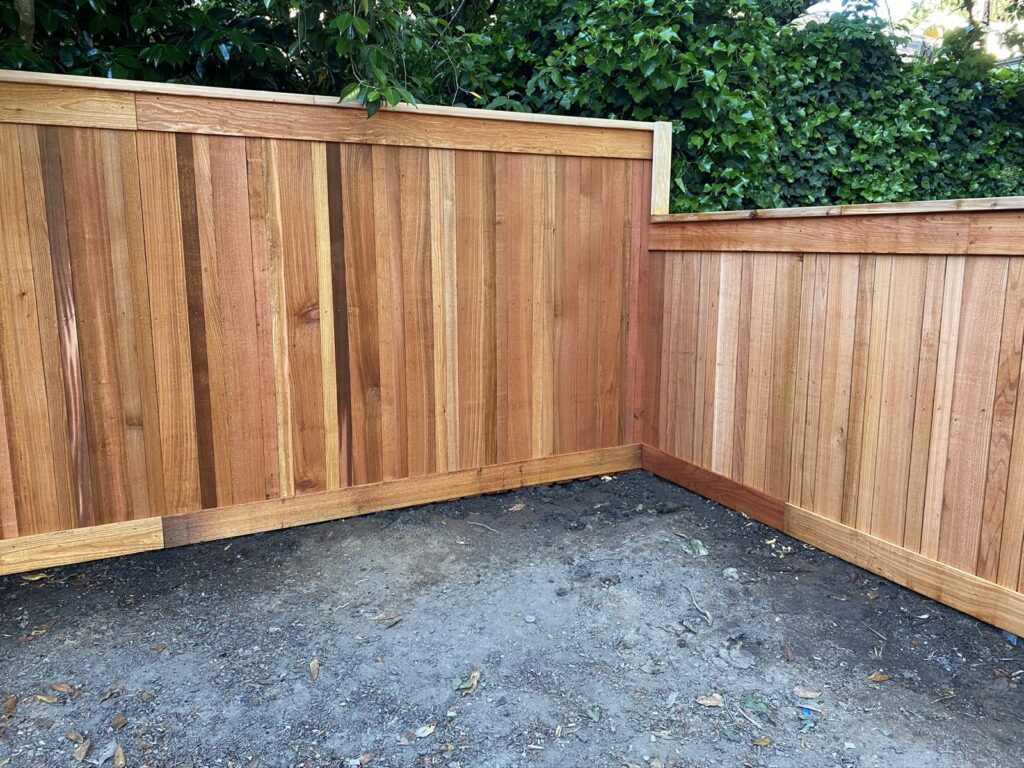
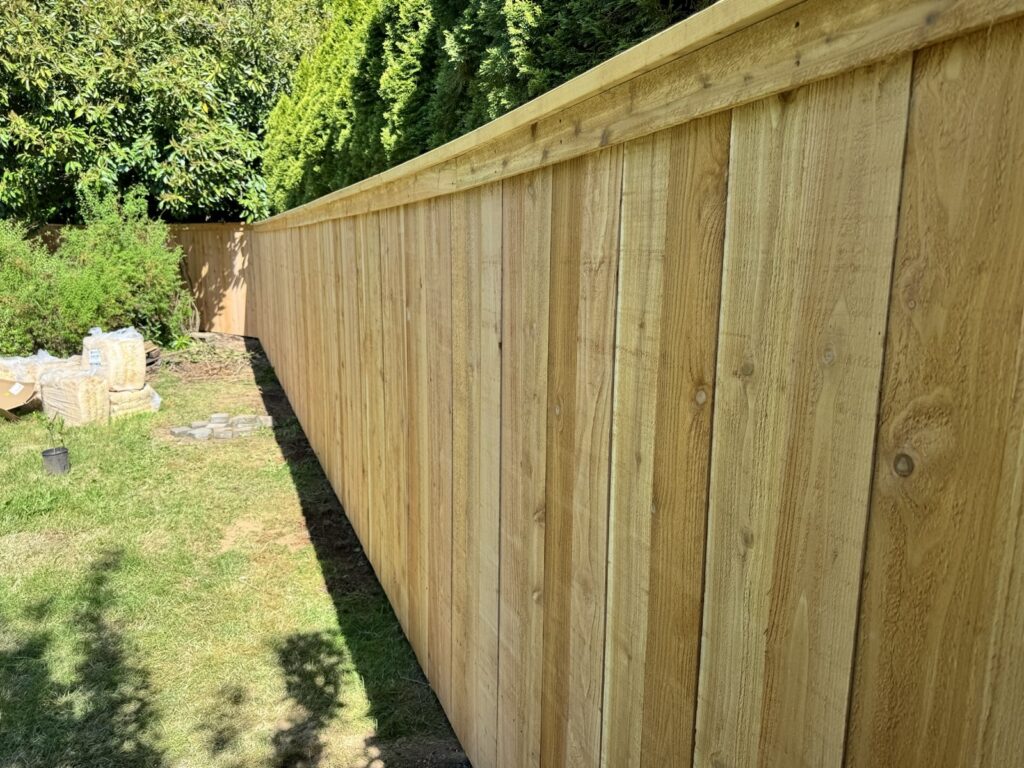
What a wood fence with metal posts looks like
It is a common question. People picture chain-link poles sticking out of a cedar fence. That is not what you get.
On a finished fence, the posts are part of the design. We will show you how they look with the style you are considering when we walk your property, so you are not left imagining it from a photo.
Steel gate frames matter just as much
The gate is the moving part of a fence, and it takes more abuse than any panel. A wood-framed gate is heavy, it is supported from one side, and it gets opened and slammed every day in the rain. It is usually the first thing a homeowner notices going wrong.
That is why steel gate frames are standard on our wood gates too. The frame keeps the gate square so it keeps latching, years after a wood-framed gate would have dropped.
Why some quotes still use wood posts
Wood posts can make the first number lower. If you are comparing two quotes for what looks like the same fence, check what the posts are made of before comparing the totals. A lower quote built on wood posts and a higher one built on steel are not the same fence. One of them is likely to need posts replaced sooner, and replacing posts usually means taking sections of the fence apart to do it.
When you compare quotes, ask each company:
- What are the posts made of, and is that standard or an upgrade?
- Is every post set in concrete, and how deep?
- What is the gate frame made of?
- What does the warranty cover, and for how long?
On our wood fences, steel posts and steel gate frames are the standard, not a premium tier and not a line item you have to ask for. Every post is set in concrete, deep enough for the fence height and how firm or soft the ground is on your lot. That construction is backed by our lifetime workmanship warranty.
What about vinyl, chain-link, and ornamental metal?
Steel posts and steel gate frames are our standard on wood fencing specifically. Vinyl, chain-link, and ornamental metal are different systems with their own structural requirements, and we build each one to its system. If you are still deciding on a material, our fence material guide compares them on privacy, upkeep, and wind exposure.
Common questions
Are steel fence posts worth it on a cedar fence?
In wet ground, yes. The most common reason a wood fence leans is a post rotting at the soil line. Steel keeps the wood out of the ground, which removes that failure point instead of slowing it down.
What if my existing fence has wood posts?
Steel posts are part of how we build new wood fences. If your existing posts are failing, we walk the whole line and tell you honestly whether repair or replacement makes sense. When the posts are all the same age, replacing a few usually buys a short reprieve before the next section goes. See our fence repair page for how we approach it.
What if my property is close to the water?
Properties close to Puget Sound put extra stress on fence hardware. If you are near the water, mention it when you request your estimate so it is part of the conversation from the start.
Do you set steel posts in concrete?
Every post, on every job, with the depth matched to the fence height and the soil on your property.
Want to see how steel posts look with the fence style you have in mind? Request an estimate and we will walk your property and show you. You can also read more about how we build for Pacific Northwest weather.