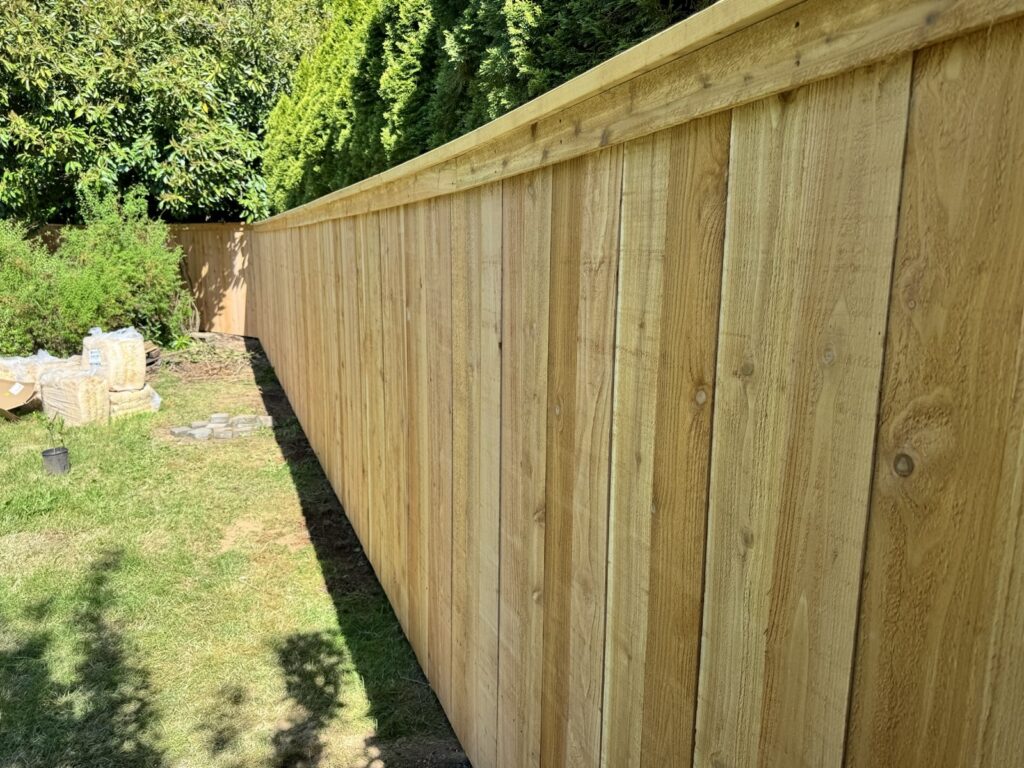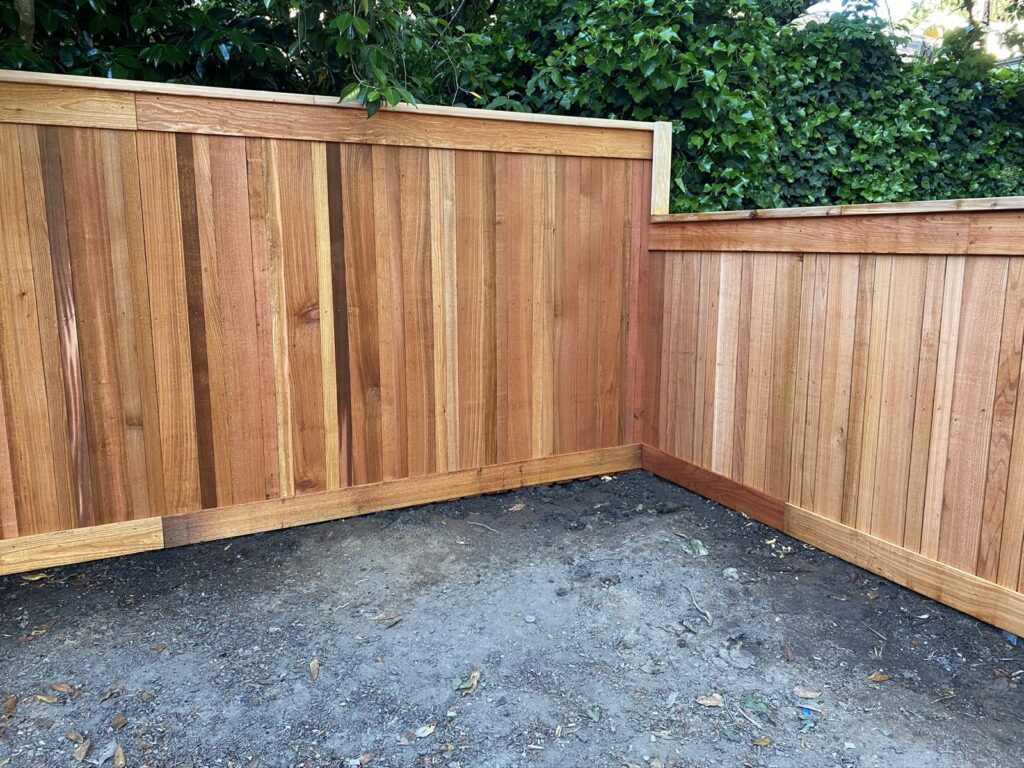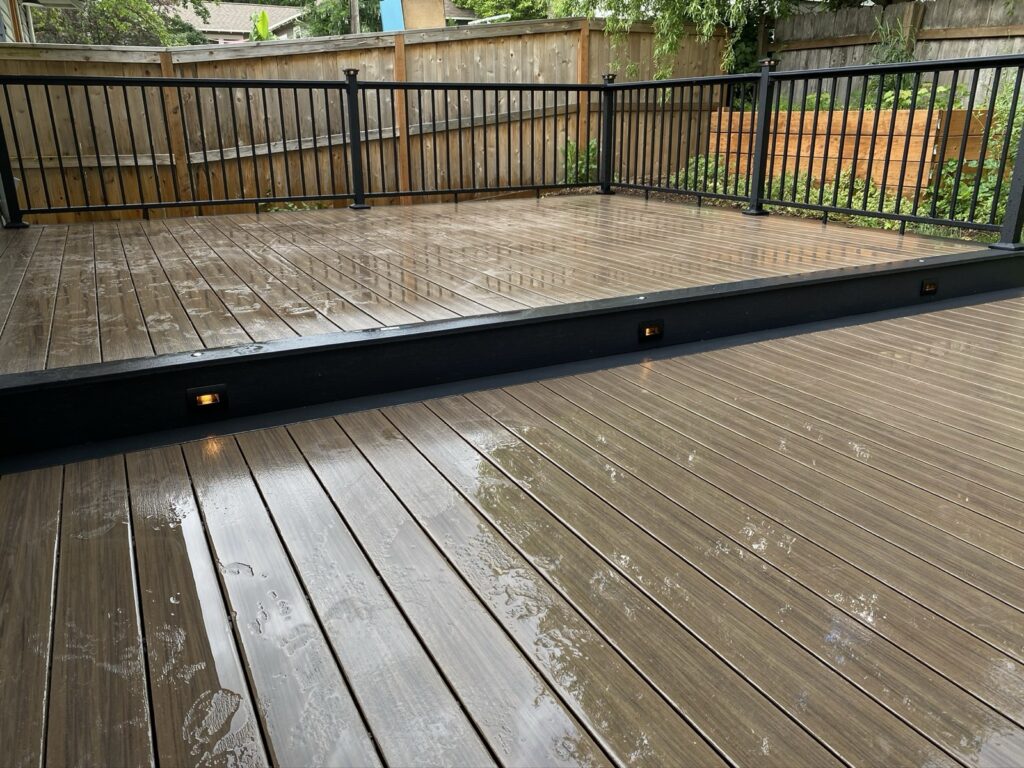
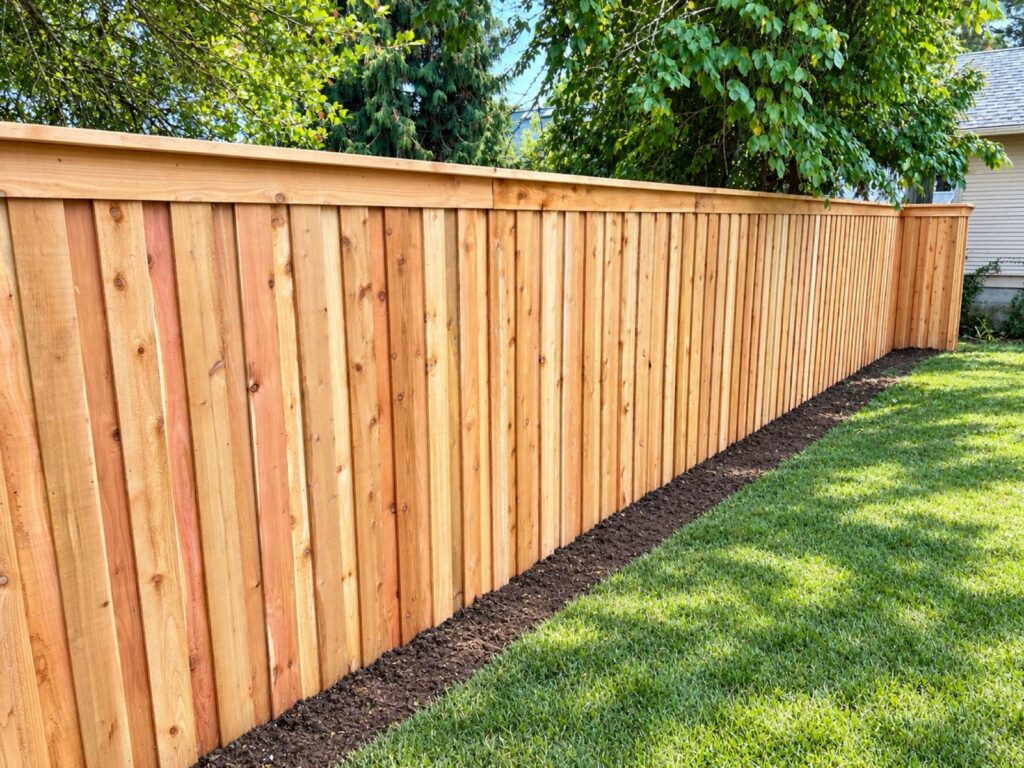
“How long will my fence last?” is a reasonable question, and you will find plenty of confident numbers online. We are going to be more careful than that. Around here, how long a fence lasts depends far less on the material on the label and far more on one component: the posts, and how they meet the ground.
Here is an honest look at what decides fence lifespan in the Pacific Northwest, material by material, and what you can control.
Why a single number is misleading
The same cedar boards can stand straight for a long time on one property and lean within a few winters on another. The difference is usually not the boards. It is drainage, exposure, how the posts were set, how the gate was built, and how much water sits against the wood. Because those conditions vary from one property to the next, we do not quote a number of years.
What we can tell you is what fails first, and how to build so it does not.
How long does a wood fence last?
On most wood fences, the boards are not what gives out first. The order is usually:
- The wood post at the soil line, where it stays wet the longest
- The gate, as a wood frame racks out of square
- The rails, once the post they are attached to has moved
- The boards, last
That means the life of a typical wood fence is often really the life of its posts. A wood post buried in wet ground is on a clock from the day it goes in. Setting it in concrete helps, but the wood is still exposed to the conditions that wear it down.
Take the wood out of the ground and that clock changes. That is why steel posts are the standard on our wood fences: they remove the most common failure point on a cedar fence. Read more in steel posts vs. wood posts.
How long does a cedar fence last?
Western red cedar naturally resists rot and insects, which is why it is the classic Northwest fence. Its weak point is rarely the cedar itself. It is wet soil, splashback at the bottom of the boards, winter wind, and the wrong supporting materials. Those shorten a cedar fence’s life long before the cedar gives out.
A cedar fence lasts longest when:
- The posts keep the wood out of saturated ground
- The boards have ground clearance and the fence line drains
- The gate has a frame that stays square
- The finish, if you choose one, is maintained per the manufacturer’s recommendations
How long does a vinyl fence last?
Vinyl does not rot, and it does not need staining or sealing. What decides how long it stays straight and solid is installation: posts set in proper footings, depth matched to the fence height and soil, and a layout that was right from the start. Vinyl is unforgiving about installation. A cedar fence that is slightly off can be coaxed straight; a vinyl fence that is slightly off looks off for good. In exposed locations, vinyl also needs proper support against wind.
How long does a chain-link fence last?
Chain link has no maintenance season to speak of. Its long-term condition depends on the end, corner, and gate posts, which carry the tension of the entire run, and on the coating and hardware holding up to exposure. Watch for rust, loose mesh, and worn hardware over time.
How long does an ornamental metal fence last?
Ornamental metal does not soften with age, and it is relatively low maintenance depending on its finish and exposure. As with the others, concrete-set posts and well-built gates are what keep it looking right.
What you can control
- Choose the build, not just the material. Ask what the posts are made of, whether they are set in concrete, and what the gate frame is.
- Manage water. Keep sprinklers, downspouts, and pooling water away from the fence line.
- Keep the base clear. Do not pile soil, mulch, or yard debris against the fence.
- Check it every spring and fall, and after major storms. Our seasonal maintenance guide lists what to look for.
- Fix problems early. A gate that starts to drag or a post that starts to move only gets worse. See how to prevent fence rot.
What our warranty does and does not mean
Our lifetime workmanship warranty covers installation quality while the original customer owns the property. If a problem results from how we built it, such as a post not set properly or a gate not hung right, we repair it at no labor cost to you. It is not a promise that the fence itself will last forever, and material defects and outside damage are excluded. We would rather tell you that plainly than oversell it.
Common questions
What is the longest-lasting fence material?
It depends on what you want the fence to do and how it is built. Vinyl, chain link, and ornamental metal avoid rot, while cedar offers warmth and privacy that many homeowners prefer. Our fence material guide compares them.
Why do fences lean?
Most leaning fences have a post problem: a wood post that rotted at the ground line, or a post that was not set deep enough for the height and soil. Wind load in winter storms finds those weak posts first.
When should I replace my fence instead of repairing it?
When several posts are failing at once or the whole line is the same age, repairs tend to come one after another. We will tell you honestly which makes more sense. See our fence repair page.
Want a fence built to stand straight for the long haul? Request an estimate and we will walk your property with you.