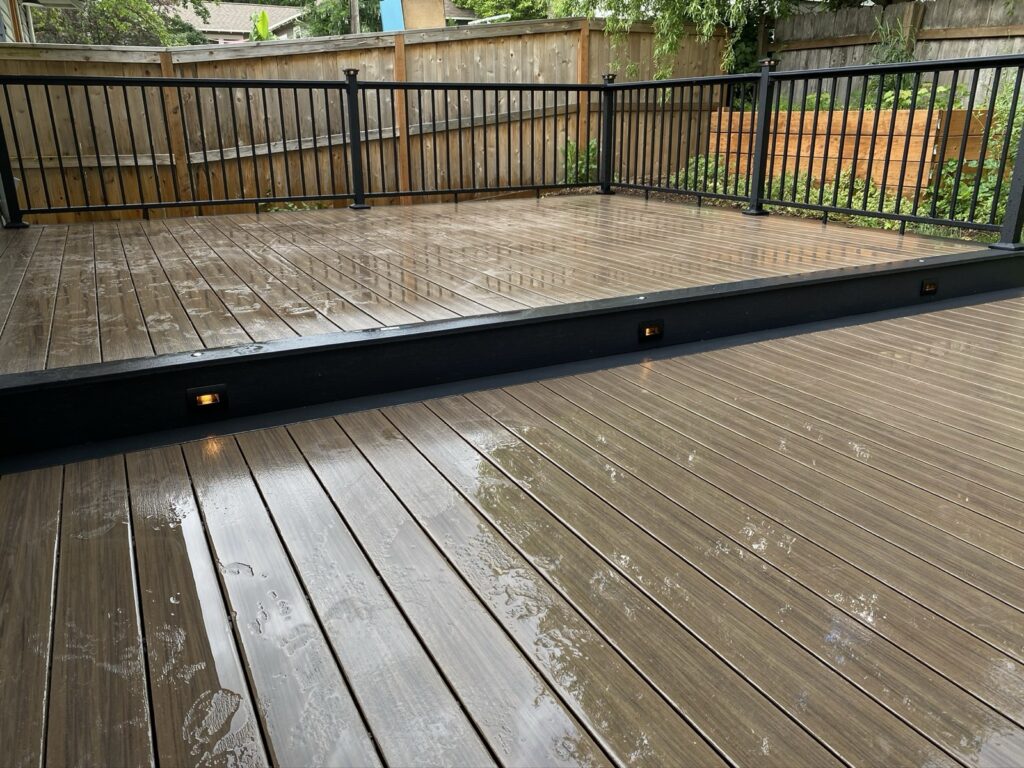
Deck maintenance in the Pacific Northwest is mostly about one thing: water. Our winters are not usually about extreme cold. They are about months of rain, wet leaves, moss, and very little drying time. A deck that goes into October covered in debris comes out of April with more to fix.
This checklist covers what to do before the rain settles in, how to get through the wet months, and what to look for in spring, whether your deck is wood or composite.
Before the rain: what to do in October
Clear the surface and the gaps
Sweep leaves, needles, and debris off the deck, and clear the gaps between boards. Debris holds moisture against the surface and in the joints, and wet leaves left through winter can stain both wood and composite.
Clean off buildup gently
Remove dirt, mildew, and early moss with a cleaner approved for your decking material. Avoid aggressive pressure washing. It can damage wood fibers and the surface of some decking products. Follow your decking manufacturer’s guidance.
Check the finish on wood decks
If the stain or sealer is worn, the wood will absorb more water through winter. Refinishing needs dry weather, so if it is due, plan it for a dry stretch and follow the finish manufacturer’s recommendations. If the weather will not cooperate, note it for spring.
Clean gutters and check drainage
Overflowing gutters can dump water onto the deck or along the house where the deck connects. Make sure downspouts carry water away from the deck and its supports, not toward them.
Check fasteners, railing, and stairs
Walk the deck and look for raised screws or nails, loose boards, and railing that moves when you push on it. A loose screw is not the same as a failing connection, but both deserve attention before the slippery season.
Move what will trap water
Planters, rugs, and furniture left in one spot all winter trap moisture underneath. Set planters on feet or move them, and store rugs for the season.
Deck maintenance through the wet months
- Keep the surface clear. Sweep regularly so leaves and needles do not mat down.
- Stay ahead of moss and algae. Keep debris off, improve airflow where you can, and clean buildup with products approved for your decking. A slippery deck is a safety issue, especially on stairs.
- Use the right tools for snow and ice. On the occasional cold snap, use a shovel and any ice melt your decking manufacturer approves, and avoid metal edges that can gouge the surface.
- Check after storms. Look for fallen branches, damaged railing, and anything that has shifted.
- Skip risky repairs. Winter is not the time for climbing or working on a wet, slippery structure. Note problems and handle them in dry weather, or call a professional.
In spring: what to look for
Once things dry out, take a closer look at what winter did:
- Soft, spongy, or crumbling wood, especially at board ends and around fasteners
- Discoloration that comes with deterioration, not just weathering
- Sagging areas or boards that bounce more than they used to
- Loose connections, railing that moves, or stairs that feel less solid
- Signs of water where the deck meets the house
A deck that feels less solid than it used to is worth having checked. If a deck looks structurally unsafe, keep people off the affected area until a qualified professional has assessed it, and do not crawl underneath an unstable deck to investigate.
Why the hidden parts matter most
The part of a deck you walk on is the part everyone shops for. The part that decides whether it is still solid in fifteen years is underneath it. Water causes the biggest problems when it cannot drain properly, soaks into exposed wood, or gets trapped where the deck connects to the house.
That house connection is the most important detail on most decks. It has to support the deck and protect the wall at the same time. Water that gets behind it does not just damage the deck; it can damage the house. When we build a deck, we treat that connection as a waterproofing job, and we plan where the water goes once it runs off the deck.
Wood or composite: does the routine change?
The basics are the same: keep it clean, keep debris off, keep water moving. Composite decking does not need staining or sealing, which removes the biggest maintenance task, but it still needs cleaning and debris removal, and the framing underneath is still exposed to moisture. Always follow your decking manufacturer’s care instructions, since products differ.
Common questions
How do I prevent moss and algae on my deck?
Keep leaves and debris off the surface, improve airflow where possible, and clean buildup with products approved for your decking material. Avoid aggressive pressure washing.
Should I cover my deck for the winter?
Tarps and covers can trap moisture against the surface. For most decks, keeping the surface clear and letting it drain and dry is the better approach.
When should I stain a wood deck in the Northwest?
Whenever you can get a run of dry weather that meets the finish manufacturer’s requirements. That usually means late spring or summer.
What are the warning signs of deck rot?
Soft or crumbling wood, discoloration along with softening, loose connections, sagging, and unusual movement.
For fences and patio covers too, see our full seasonal maintenance guide. Thinking about replacing an aging deck? Request an estimate.